Madonna with the Child and Two Angels - Filippo Lippi at the Uffizi
Complete guide to Filippo Lippi’s Madonna with the Child and Two Angels at the Uffizi Gallery. Discover its symbolism, history, and visiting tips.
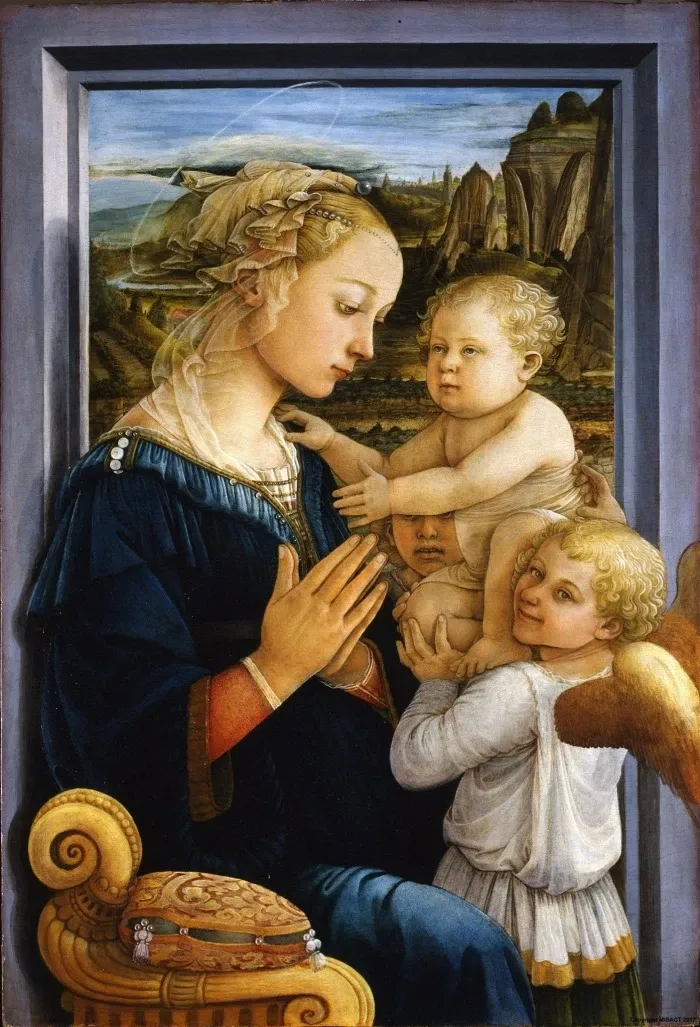
Madonna with the Child and Two Angels by Filippo Lippi: A Renaissance Treasure
Painted around 1465 by the Carmelite friar and master painter Filippo Lippi, Madonna with the Child and Two Angels is one of the Uffizi Gallery’s most beloved works. Celebrated for its warmth and human intimacy, this painting represents a turning point in Renaissance depictions of the Virgin and Child.
The Story Behind the Painting
Unlike earlier, more formal representations, Lippi’s Madonna appears as a graceful young mother, tenderly engaging with the Christ Child. Two playful angels support the infant, bridging the sacred and the earthly with their mischievous smiles—a hallmark of Lippi’s innovative style.
Symbolism and Meaning
This work reflects both devotion and naturalism, hallmarks of mid-15th-century Florentine art. Lippi imbues the sacred scene with human warmth while retaining subtle theological references.
Key Symbolic Elements:
- The Veil: Draped over Mary’s head, signifying purity and humility
- The Window Opening: Suggests divine light and the gateway between heaven and earth
- The Angels: Represent both guardianship and joyful witnesses of the Incarnation
- The Landscape: Evokes the Tuscan countryside, grounding the sacred in the familiar
Technical Mastery
Lippi’s technique in this painting demonstrates his mastery of:
- Soft modeling of figures: Achieving lifelike expressions and tender gestures
- Naturalistic space: Using depth and perspective to create an airy, luminous setting
- Color harmony: Balancing serene blues, earthy greens, and radiant golds
- Human emotion: Capturing warmth and intimacy unusual in earlier Marian art
The Medici Connection
Filippo Lippi worked under Medici patronage throughout his career. His approach to religious imagery, blending elegance with human touch, strongly influenced later artists—including his pupil Sandro Botticelli.
Visiting Tips
When viewing Madonna with the Child and Two Angels at the Uffizi:
- Best viewing time: Early morning or later in the afternoon for calmer galleries
- Room location: Displayed in the Early Renaissance section (check the current room number at entry)
- Photography: Flash photography is prohibited
- Audio guide: Recommended for insights into Lippi’s innovative style
Cultural Impact
Lippi’s Madonna with the Child and Two Angels helped shape the humanized vision of the Virgin and Child that would dominate Renaissance art. Its influence can be traced in the works of Botticelli, Perugino, and countless others.
Conservation Efforts
The Uffizi’s conservation team has ensured the preservation of this delicate panel. Careful cleaning and restoration have revealed Lippi’s subtle brushwork and the painting’s original luminosity.
Plan your visit to see this Renaissance treasure in person and experience the gentle beauty that has captivated art lovers for over five centuries.
About the Author

Dr. Maria Rossi, Art Historian
Passionate about art and travel, I created this site to help fellow travelers make the most of their visit to the Uffizi Gallery in Florence. With years of experience exploring museums worldwide, I share practical tips and insights to enhance your cultural journey.
Tags
Comments (0)
Loading comments...