Sala del Botticelli Uffizi - Birth of Venus & Primavera Room
Visit the Botticelli Room at Uffizi Gallery featuring The Birth of Venus and Primavera. Complete guide to Renaissance masterpieces and room highlights.
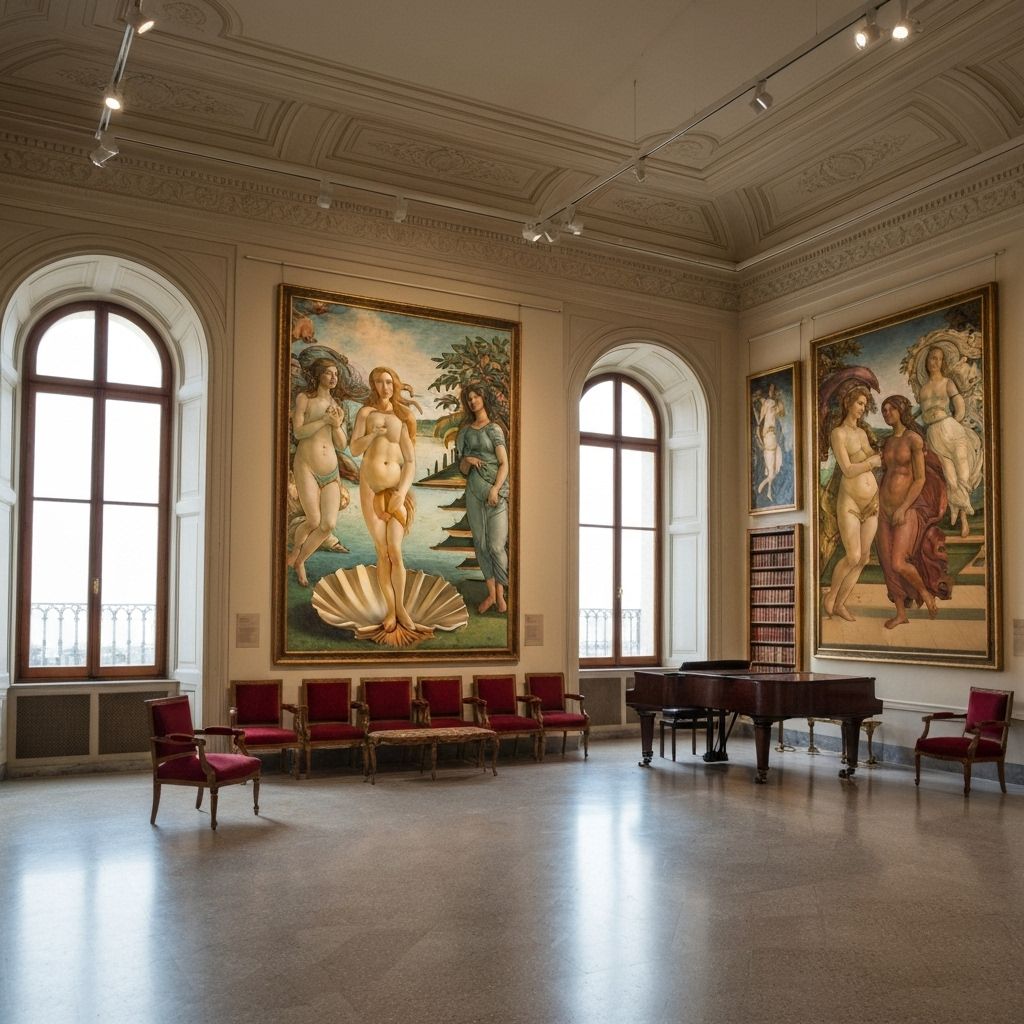
Sala del Botticelli: Temple of Renaissance Beauty
The Sala del Botticelli represents the crown jewel of the Uffizi Gallery, housing some of the most recognizable and beloved paintings in Western art history. This sacred space of Renaissance beauty draws millions of visitors annually to witness Sandro Botticelli's immortal masterpieces.
The Master's Sanctuary
Sandro Botticelli (1445-1510)
Born Alessandro di Mariano di Vanni Filipepi, Botticelli became:
- Leading Renaissance painter in 15th-century Florence
- Medici court artist enjoying prestigious patronage
- Mythological storyteller through visual narrative
- Technical innovator in tempera painting techniques
Room Design and Atmosphere
The hall's presentation enhances the viewing experience:
- Optimal lighting designed specifically for tempera paintings
- Spacious layout allowing proper viewing distances
- Climate control preserving delicate pigments
- Minimal distractions focusing attention on masterworks
The Birth of Venus (c. 1484-1486)
Artistic Revolution
This iconic masterpiece represents:
- Mythological subject matter in Christian Renaissance context
- Nude figure revival in Western art
- Neoplatonic philosophy visualized through beauty
- Technical mastery in tempera on canvas
Symbolic Elements
The painting's rich symbolism includes:
- Venus representing divine love and beauty
- Zephyrus and Aura as winds of passion
- Hour of Spring offering modesty and protection
- Shell symbolizing fertility and birth
Artistic Techniques
Botticelli's innovations feature:
- Linear grace with flowing, rhythmic lines
- Translucent skin tones achieving ethereal beauty
- Decorative details in hair and drapery
- Atmospheric perspective in seascape background
Primavera (c. 1477-1482)
Allegorical Complexity
This earlier masterpiece presents:
- Nine figures in elaborate mythological dance
- Seasonal transformation from winter to spring
- Neoplatonic themes of love's civilizing power
- Botanical accuracy with over 500 plant species
Figure Identification
The composition includes:
- Mercury dispelling clouds of ignorance
- Three Graces representing beauty's aspects
- Venus as goddess of love presiding
- Flora, Chloris, and Zephyrus in transformation myth
Artistic Achievement
The painting demonstrates:
- Compositional harmony balancing multiple figures
- Narrative sophistication telling complex story
- Decorative richness in costume and setting
- Emotional range from passion to serenity
Other Botticelli Works
Pallas and the Centaur (c. 1482)
This allegorical work features:
- Wisdom conquering brutality theme
- Medici symbolism in Pallas's dress
- Moral instruction through mythological narrative
- Psychological depth in character interaction
Madonna of the Magnificat (c. 1483)
Religious masterpiece showing:
- Circular composition (tondo format)
- Intimate devotion in family scene
- Calligraphic beauty in text inscription
- Symbolic elements throughout composition
Historical Context
Medici Patronage
The paintings reflect:
- Lorenzo de' Medici's cultural circle
- Humanist philosophy influencing art
- Classical revival in Renaissance Florence
- Artistic freedom under enlightened patronage
Cultural Impact
These works influenced:
- Subsequent Renaissance artists for centuries
- Romantic movement rediscovery in 19th century
- Modern popular culture through reproduction
- Art historical scholarship and interpretation
Viewing Experience
Optimal Appreciation
For best experience:
- Early morning visits avoid peak crowds
- Multiple viewings reveal new details
- Varied distances show different aspects
- Quiet contemplation enhances emotional impact
What to Notice
Key observation points:
- Facial expressions conveying inner states
- Hand gestures telling story elements
- Fabric textures showing technical skill
- Background details enriching narratives
Conservation and Care
Preservation Challenges
Ongoing conservation addresses:
- Tempera fragility requiring careful climate control
- Light sensitivity managed through LED systems
- Visitor impact controlled through crowd management
- Age-related changes monitored continuously
Recent Restorations
Modern conservation has revealed:
- Original color brilliance beneath old varnish
- Artist's techniques through scientific analysis
- Historical modifications and their removal
- Preventive measures for future protection
Educational Significance
Art Historical Importance
These works teach:
- Renaissance artistic development and innovation
- Mythological interpretation in Christian context
- Patronage systems and their influence
- Technical evolution in painting methods
Cultural Legacy
The paintings represent:
- Western beauty ideals formation and influence
- Artistic inspiration across centuries
- Cultural identity of Renaissance Florence
- Universal themes of love, beauty, and transformation
Planning Your Visit
Timing Strategy
- Weekday mornings offer quieter viewing
- Extended visits allow proper appreciation
- Audio guides provide expert commentary
- Photography permitted without flash
Nearby Masterpieces
Combine with visits to:
- Leonardo da Vinci rooms for artistic comparison
- Michelangelo works for Renaissance scope
- Raphael paintings for High Renaissance
- Caravaggio for Baroque contrast
The Sala del Botticelli offers an unparalleled encounter with Renaissance genius, where mythology, philosophy, and artistic mastery unite to create timeless beauty that continues to inspire and move visitors from around the world.
About the Author

Uffizi Gallery Expert
Passionate about art and travel, I created this site to help fellow travelers make the most of their visit to the Uffizi Gallery in Florence. With years of experience exploring museums worldwide, I share practical tips and insights to enhance your cultural journey.
Tags
Comments (0)
Loading comments...